During an extremely quiet and seemingly birdless morning, a single Reed Bunting was far and away the stand-out find. Efforts to locate something more exciting eventually turned up a few migrants, but most of these were birds that had been present for some days. Warblers included a Garden Warbler, three Blackcaps, 25 Chiffchaffs, five Goldcrests and a Willow Warbler, while the only other passerines worth mentioning were a Song Thrush, five Grey Wagtails, four Skylarks, 31 Goldfinches and a Redpoll. A Ringed Plover was the only new wader, and the Bar-tailed Godwit was present on the beach for its twelfth day.
Wednesday, 30 September 2009


Tuesday, 29 September 2009
Still the fine weather continued, and still very little change was in evidence amongst the birds. A Great Skua and two Mediterranean Gulls flew past in the morning, and a flock of 12 Ravens paid the island a brief visit. The Lesser Whitethroat, Garden Warbler and two Blackcaps were still quietly devouring the berries in Nant Withy, and 15 Chiffchaffs and a Goldcrest also remained. Two Water Rails, a Merlin, a Redpoll and the Bar-tailed Godwit were also lingering from earlier in the week. Skylarks are rarely ringed on Bardsey these days, so one (a long-staying and confiding individual) trapped in the arable fields was a nice addition to the year’s ringing totals.

One of the moth highlights of the last few days was this Red-Green Carpet caught in Cristin Withy. Photo (c) Richard Else
Monday, 28 September 2009
Much the same birds as the previous day were still present, with little immigration augmenting the numbers. The Firecrest was still at the plantation, and counts of other small migrants included 32 Chiffchaffs, seven Blackcaps, six Goldcrests, two Willow Warblers, five Wheatears, four Grey Wagtails and just one each of Lesser Whitethroat, Garden Warbler, Song Thrush and Starling. After the big hirundine arrival of the day before, counts of just six Swallows and four House Martins seemed particularly paltry. A Lapland Bunting was seen flying over the observatory and a Redpoll, 15 Goldfinches and 24 Chaffinches were also recorded overhead. Two Mediterranean Gulls and 46 Black-headed Gulls flew by at sea, the Bar-tailed Godwit was still on the beach and a Water Rail was still in the withies.
It was another good night for moths, with Red-line Quaker and Dark Sword-grass amongst high numbers of Lunar Underwings and Feathered Ranunculus.
Sunday, 27 September 2009
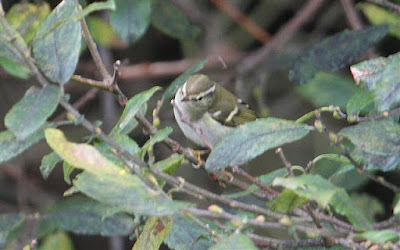
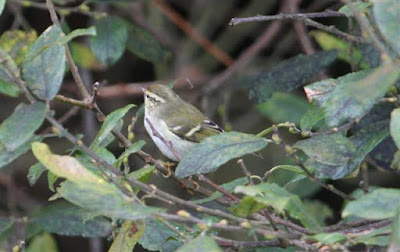
The prolonged spell of pleasant weather continued and even delivered a few birds to the island, producing a good day all round. The first Firecrest of the autumn was discovered near the plantation, and a short time later a Yellow-browed Warbler was found in the adjacent withy. Other warblers included a Lesser Whitethroat, five Blackcaps, a Garden Warbler, 32 Chiffchaffs, two Willow Warblers and 12 Goldcrests. A Song Thrush was at nant, a Whinchat near Cristin, and seven Wheatears were around the Narrows. Over 200 Meadow Pipits were counted in the morning, many of which were fresh migrants around the South End, and a large increase in the number of Linnets brought their total to 200. 22 Grey Wagtails flew South early on, and a large gathering of hirundines, comprising 400 Swallows and 40 House Martins, had assembled over the mountain by mid-day. Besides the Linnets, finches were represented by 30 Chaffinches, 20 Goldfinches, two Siskins and two Redpolls. A Wigeon was found amongst the roosting gulls and waders on Carreg yr Honwy and, at sea, an Arctic Skua, a Puffin and a Common Gull passed by. A Ringed Plover, seven Dunlins, four Snipes and the Bar-tailed Godwit were the best of the waders.
The millpond-like sea was perfect for watching for cetaceans, and at least ten Risso’s Dolphins obligingly spent the day off the west coast.
The contents of the Cristin moth trap were unseasonably spectacular, in quantity at least, with 323 moths in total. 255 of these were Lunar Underwings – a typical autumn species – but other less frequent species included the second ever Grey Pine Carpet for the island and a Caloptilia stigmatella.
.jpg)
.jpg)
.jpg)
.jpg)
Yellow-browed Warbler
(c) Steve Stansfield
.jpg)
Chiffchaff
(c) Steve Stansfield
.jpg)
Lesser Whitethroat
(c) Steve Stansfield
.jpg)
Garden Warbler
(c) Steve Stansfield
.jpg)
Grey Wagtail
(c) Steve Stansfield
Saturday, 26 September 2009
The selection and quantity of landbirds remained much the same and, once again, the most interesting bird was seen flying past the island at sea; namely the first Red-throated Diver of the autumn. A gathering of hirundines near Ty Pellaf contained 161 Swallows and four House Martins, a Collared Dove arrived, two Merlins were at the north end of the island and a Golden Plover was on the South End. Passerines were predominantly represented by birds lingering from the preceding day or two, but counts included one Redstart, two Spotted Flycatchers, seven Wheatears, six Grey Wagtails, four Blackcaps, four Whitethroats, 28 Chiffchaffs, three Willow Warblers, two Goldcrests, two Redpolls, three Siskins and 15 Goldfinches. A pod of 14 Harbour Porpoises was seen from Pen Cristin.
.jpg)
Wheatear
(c) Steve Stansfield
.jpg)
Spotted Flycatcher
(c) Steve Stansfield
.jpg)
Hummingbird Hawkmoth
(c) Steve Stansfield
.jpg)
Grey Wagtail
(c) Steve Stansfield
Friday, 25 September 2009
Once again, little change was in evidence amongst the birds present on the island. Numbers of small passerines were slightly better, with 36 Chiffchaffs, four Whitethroats, three Blackcaps, four Goldcrests, five Wheatears, a Song Thrush, six Grey Wagtails, a Redstart, a Spotted Flycatcher and a Tree Pipit counted during the morning. 33 Chaffinches were seen – an increase on recent days – as well as a Siskin and 17 Goldfinches. The most unusual bird of the day was a drake Eider seen flying past Pen Cristin, and a Mediterranean Gull was the only other noteworthy bird out to sea. Three Water Rails were squealing away in the withies, and six Dunlins, four Whimbrels and the Bar-tailed Godwit were on the coast.
Thursday, 24 September 2009
An Icterine Warbler at Nant was the best bird of the day, although it is not certain whether it is a different bird to the one on Saturday or not. Two Redstarts were also at Nant, and whole-island counts of other small migrants included 20 Chiffchaffs, nine Goldcrests, two Blackcaps, a Spotted Flycatcher, a Song Thrush, four Wheatears, nine Goldfinches, two Siskins, a Redpoll, two House Martins and five Grey Wagtails. A Golden Plover was on the South End, four Snipes were in the lowlands and the Bar-tailed Godwit, three Whimbrels and seven Dunlins were on the beach.
An array of bird-trapping equipment, including the portable Heligoland trap and a ‘whoosh net’, was assembled on Solfach in an attempt to catch and ring some of the birds that were attracted to the insect-rich seaweed on the tide line. No Choughs, waders or gulls were caught, but several each of Meadow Pipit, Rock Pipit, Pied Wagtail and White Wagtail were ringed.
Risso’s Dolphins put on a show again during the morning, with two separate pods, numbering at least 12 and ten, seen quite close offshore. One of Bardsey’s most popular mammals, the Grey Seals, are in the process of pupping at the moment. Six pups were counted today, and this number is set to increase rapidly in the next week or so.
An array of bird-trapping equipment, including the portable Heligoland trap and a ‘whoosh net’, was assembled on Solfach in an attempt to catch and ring some of the birds that were attracted to the insect-rich seaweed on the tide line. No Choughs, waders or gulls were caught, but several each of Meadow Pipit, Rock Pipit, Pied Wagtail and White Wagtail were ringed.
Risso’s Dolphins put on a show again during the morning, with two separate pods, numbering at least 12 and ten, seen quite close offshore. One of Bardsey’s most popular mammals, the Grey Seals, are in the process of pupping at the moment. Six pups were counted today, and this number is set to increase rapidly in the next week or so.
Wednesday, 23 September 2009
Very little change from the previous day was noted, with many of the same birds still present on the island. The 11 Chiffchaffs and the same Whitethroat remained, along with a Spotted Flycatcher. Goldcrests increased to eight, a Song Thrush was at Cristin, nine White Wagtails were on the beach and six Grey Wagtails, two Siskins, a Redpoll and nine Goldfinches were counted. The three Teals, two Knots, Bar-tailed Godwit, Water Rail and Snipe were recorded again, and a Mediterranean Gull, three Common Gulls and a notable build up of 656 Kittiwakes were seen at sea.
The contents of the moth trap are not quite as varied and exciting at this time of year as they can be at the height of summer, but a selection of autumnal species is present nevertheless. The best moth in the last few days was a Red-green Carpet caught in Cristin Withy, which may be only the second record for the island.
The contents of the moth trap are not quite as varied and exciting at this time of year as they can be at the height of summer, but a selection of autumnal species is present nevertheless. The best moth in the last few days was a Red-green Carpet caught in Cristin Withy, which may be only the second record for the island.
.jpg)
Bar-tailed Godwit
(c) Ben Porter
Tuesday, 22 September 2009
After a miserable, drizzly morning, the afternoon was bright and sunny with little wind. Birds were thin on the ground again, with a very similar number of passerines to the previous day: 11 Chiffchaffs, five Goldcrests, two Spotted Flycatchers, a Whitethroat, a Blackcap, ten Wheatears, three Greenfinches and two House Martins were the best on offer. Two Knots, a Bar-tailed Godwit, four Whimbrels, nine Dunlins and the three Teals were in Solfach, a Snipe was in the wetlands and a Water Rail was still in Cristin Withy. A single Arctic Skua and two Common Gulls were the only noteworthy birds seen passing at sea.
.jpg)
Common Gull
(c) Steve Stansfield
Monday, 21 September 2009
A further reduction in the number of passerine migrants left the gardens and bushes seeming very empty: just 11 Chiffchaffs, five Goldcrests, a Spotted Flycatcher, a Reed Warbler, a Whitethroat, and a Blackcap remained. Alba Wagtail numbers remained much the same, and three Grey Wagtails were also present early in the morning. Nine Wheatears were around the coast and a couple of Greenfinches flew overhead. The highlight of a lengthy and largely uneventful seawatching session came when a Cory’s Shearwater flew past the South End. A Mediterranean Gull was seen with 40 Black-headed Gulls, two Water Rails were in the withies, the Merlin remained, and the three Teals, two Knots and a Bar-tailed Godwit were in Solfach.
.jpg)
Grey Wagtail
(c) Steve Stansfield
Sunday, 20 September 2009
Despite a night that had begun with dark and cloudy conditions, a clear sky by the early hours saw a mass departure of small birds from the island that left just small numbers of common migrants. Only 24 Chiffchaffs remained, with a single Willow Warbler, two Whitethroats, a Grasshopper Warbler, a Sedge Warbler, nine Wheatears, four Goldcrests and two Spotted Flycatchers also seen, and nine Grey Wagtails and 18 White Wagtails counted. The high-tide wader roost contained a Black-tailed Godwit, two Bar-tailed Godwits, two Knots and six Dunlins, while seven Snipes were flushed from the lowlands and a Common Sandpiper was at the north end. At sea 51 Black-headed Gulls, a Mediterranean Gull, a Common Gull, three Sandwich Terns and a Common Tern passed by the coast. The three Teals were still in Solfach and the Merlin was still harassing pipits on the South End.
Chiffchaff
(c) Steve Stansfield
.jpg)
Saturday, 19 September 2009
Although not quite reaching the level of excitement of the last couple of days, there was still plenty to see on the island including a few minor rarities. A lighthouse attraction had clearly occurred very late in the night, leaving a fall of warblers in the nearby gorse bushes. Amongst these were the first Yellow-browed Warbler of the year, a Lesser Whitethroat, a couple of Grasshopper Warblers, three Blackcaps, three Whitethroats, over 50 Chiffchaffs, three Sedge Warblers, 12 Willow Warblers and a Water Rail. An immature Marsh Harrier (the first this year) flew over the north end of the island and a short time later an Icterine Warbler (the record-equalling fourth of the year) was seen near the Chapel. The odd ‘Reed’ Warbler was still at Nant, a flava Wagtail was on the beach, a Lapland Bunting was still flying around and a couple of Redstarts, a Whinchat, 26 Wheatears and a further 100 Chiffchaffs were also seen. Ten Grey Wagtails, a Tree Pipit and five Skylarks flew over, three Teal were in Solfach, and raptors included two Buzzards, two Sparrowhawks and a Kestrel. Two Spotted Flycatchers and five Goldcrests were at the plantation with a couple of Siskins, two Redpolls and nine Goldfinches, while down on the beach were five Bar-tailed Godwits, a Sanderling, the Little Stint, a Knot, six Dunlins and a Ringed Plover.
Some unusual butterflies have been seen in recent days. Speckled Woods have been seen daily, a highly unusual event on Bardsey, and today a Comma was found at Nant – only the fifth ever to be recorded here.
Some unusual butterflies have been seen in recent days. Speckled Woods have been seen daily, a highly unusual event on Bardsey, and today a Comma was found at Nant – only the fifth ever to be recorded here.
Friday, 18 September 2009
WOW!
It's not often we get to start with such a word and I'm sure that when Richard gives a full update later he will find some other similar word to start with.
Wow indeed. A particularly memorable morning began with an unsuccessful attempt to relocate the Paddyfield Warbler, although the efforts did result in the finding of a Barred Warbler in Nant Valley. As observatory staff were arriving to see it, the news broke of a Kingfisher on the South End. A Kingfisher!!! Without waiting to see the Barred Warbler, a hasty jog was made the length of the island to see the blue and orange Bardsey mega-rarity, but in vain – the bird had already vanished. A few birders arrived on the first boat of the day hoping to see the Paddyfield Warbler and, on being told of its disappearance, made their way to the north end of the island to see the consolation prize Barred Warbler. Frustratingly, this too had apparently moved on. Was their twitch to the island to be completely fruitless?
Amazingly, and emphatically, no. Those that had made the trip across were treated to the fantastic spectacle of a flock of ten Glossy Ibises arriving from the north, circling for a few minutes above the north hide, and then drifting south along the west coast and over the heads of the failed kingfisher-seekers by the lighthouse – a sight arguably even better than a Paddyfield Warbler.
.jpg)
.jpg)
Glossy Ibises: the first record for Bardsey. Pictures (c) Steve Stansfield
Besides the eclectic trio of vagrants, a fairly good supporting cast of commoner migrants was also on the island. At least one Lapland Bunting was present, along with 57 Wheatears, three Redstarts, a flava Wagtail, 139 Chiffchaffs, nine Willow Warblers, five Whitethroats, two Blackcaps, a Grasshopper Warbler, five Goldcrests, five Spotted Flycatchers, a Song Thrush and 42 White Wagtails. 19 Grey Wagtails, six Tree Pipits and 185 Meadow Pipits were counted overhead in the morning, while a few finches also appeared including 14 Goldfinches, a Redpoll, a Siskin and a Greenfinch. Two Common Sandpipers were on the coast, as were the Little Stint, two Golden Plovers, a Lapwing, a Knot and a Ringed Plover.
The unusual Acrocephalus Warbler from earlier in the week appeared in a mist net in the afternoon, and proved to be just as puzzling in the hand as it was when it was skulking in the undergrowth. Measurements all pointed towards Reed Warbler, but its colouration was certainly very unusual. The possibility of a hybrid is being considered.
.jpg)
"Reed" Warbler (c) Steve Stansfield
.jpg)
Normal looking Reed Warbler in September last year
(c) Richard Else
Thursday, 17 September 2009
A good covering of cloud is often very helpful for bringing migrant birds to the island, and so, with a promising layer of altocumulus hanging over the island, the early morning census was undertaken with a certain optimism. A sizeable increase in the number of Chiffchaffs – at least 80 were present – was the most obvious sign of an arrival, as other passerine counts were similar to the previous couple of days: 15 Willow Warblers, four Whitethroats, three Grasshopper Warblers, two Blackcaps, a Reed Warbler, five Spotted Flycatchers, a Redstart, a Whinchat and six Goldcrests were counted. The first Lesser Whitethroat of the autumn was at Nant, a/the Lapland Bunting was seen several times and a Starling flew south. Early morning visible migration included 19 Grey Wagtails, 178 Meadow Pipits and five Tree Pipits, while 35 White Wagtails were on the beach. A Dark-bellied Brent Goose was a surprising arrival on the Narrows, and three Eiders heading south were also unexpected. A Lesser Black-backed Gull amongst the roosting gulls on Carreg y Honwy showed characters of the continental race intermedius, the Little Stint on Solfach was joined by a second bird, and other waders included three Knots, a Ringed Plover, three Dunlins and 64 Turnstones.
A fair selection, but the day’s star bird did not appear until late afternoon. In the unlikely, unvegetated location of the North West fields, a Paddyfield Warbler was found feeding along the fences and banks, and before long had been seen by every birder on the island. This is the third record of Paddyfield Warbler for Wales, and the second for Bardsey following the one here last autumn.
.jpg)
.jpg)
A fair selection, but the day’s star bird did not appear until late afternoon. In the unlikely, unvegetated location of the North West fields, a Paddyfield Warbler was found feeding along the fences and banks, and before long had been seen by every birder on the island. This is the third record of Paddyfield Warbler for Wales, and the second for Bardsey following the one here last autumn.
.jpg)
.jpg)
Paddyfield Warbler (c) Steve Stansfield
Wednesday, 16 September 2009
A juvenile Little Stint spent the day on Solfach in the company of the usual waders. The Lapland Bunting was still on the island, and a similar number of Meadow Pipits to the previous day passed over in the morning. 12 Grey Wagtails, 14 White Wagtails and 27 Wheatears were around the coast, while making use of the gardens and bushes were a Whinchat, four Whitethroats, two Blackcaps, a Sedge Warbler, 11 Chiffchaffs, two Willow Warblers, six Goldcrests and ten Goldfinches. Four Snipe were seen in the marshy areas of the island, four Dunlins and a Ringed Plover were on the beach and a Teal and an Arctic Skua flew by at sea.
A Migrant Hawker dragonfly was seen at Ty Pellaf.
.jpg)
.jpg)
.jpg)
.jpg)
.jpg)
A Migrant Hawker dragonfly was seen at Ty Pellaf.
.jpg)
Wheatear (c) Steve Stansfield
.jpg)
.jpg)
.jpg)
Little Stint (c) Steve Stansfield
.jpg)
Ringed Plover (c) Steve Stansfield
Tuesday, 15 September 2009
Six Red-breasted Mergansers flying past the South End and a Lapland Bunting near Cristin were the highlights of another fairly slow day of migration. Some pipit movement in off the sea in the morning included two Tree Pipits and over 100 Meadow Pipits. A flava Wagtail was on Solfach with 15 White Wagtails, and at least five Grey Wagtails were seen overhead. A range of warblers present consisted of Grasshopper Warbler, two Sedge Warblers, two Whitethroats, a Blackcap, eight Chiffchaffs, four Willow Warblers and 12 Goldcrests, while the chat family was represented by two Whinchats, a Redstart and 28 Wheatears amongst the resident species. The Water Rail, Merlin and two Knots remained on the island, and a couple of Ringed Plovers and three Snipe were also seen. At sea, a Great Skua, one Mediterranean Gull, three Common Terns and 68 Black-headed Gulls went by, and three more Risso’s Dolphins were seen just off Henllwyn.

.jpg)
Subscribe to:
Posts (Atom)